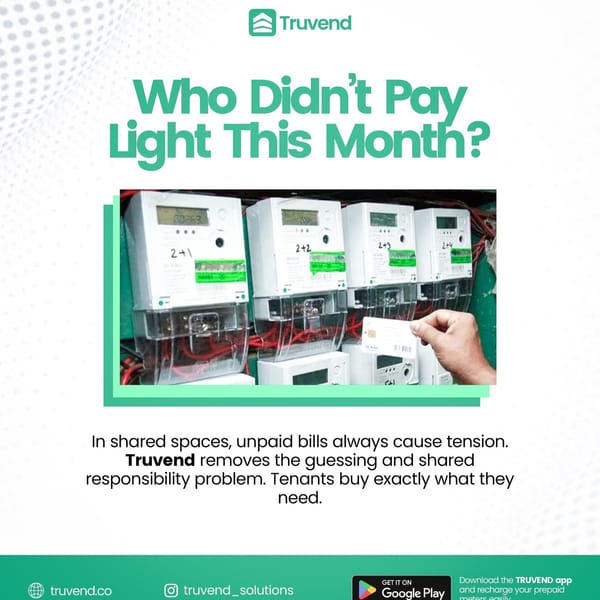
How much does it cost to sub-meter a block of flats in Nigeria?
Most vendors won't give you a number until you've sat through a call. Here are ours, up front.
The prices
| What | Price per unit |
|---|---|
| Single-phase prepaid meter, without CIU | ₦65,000 |
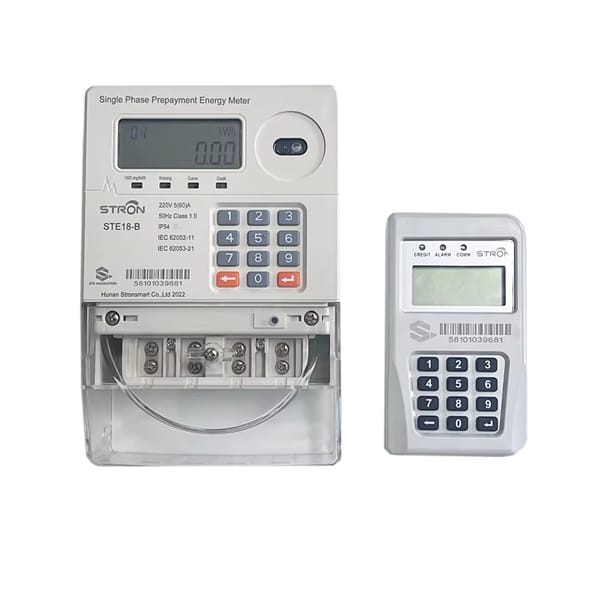
| Single-phase prepaid meter, with CIU | ₦85,000 |
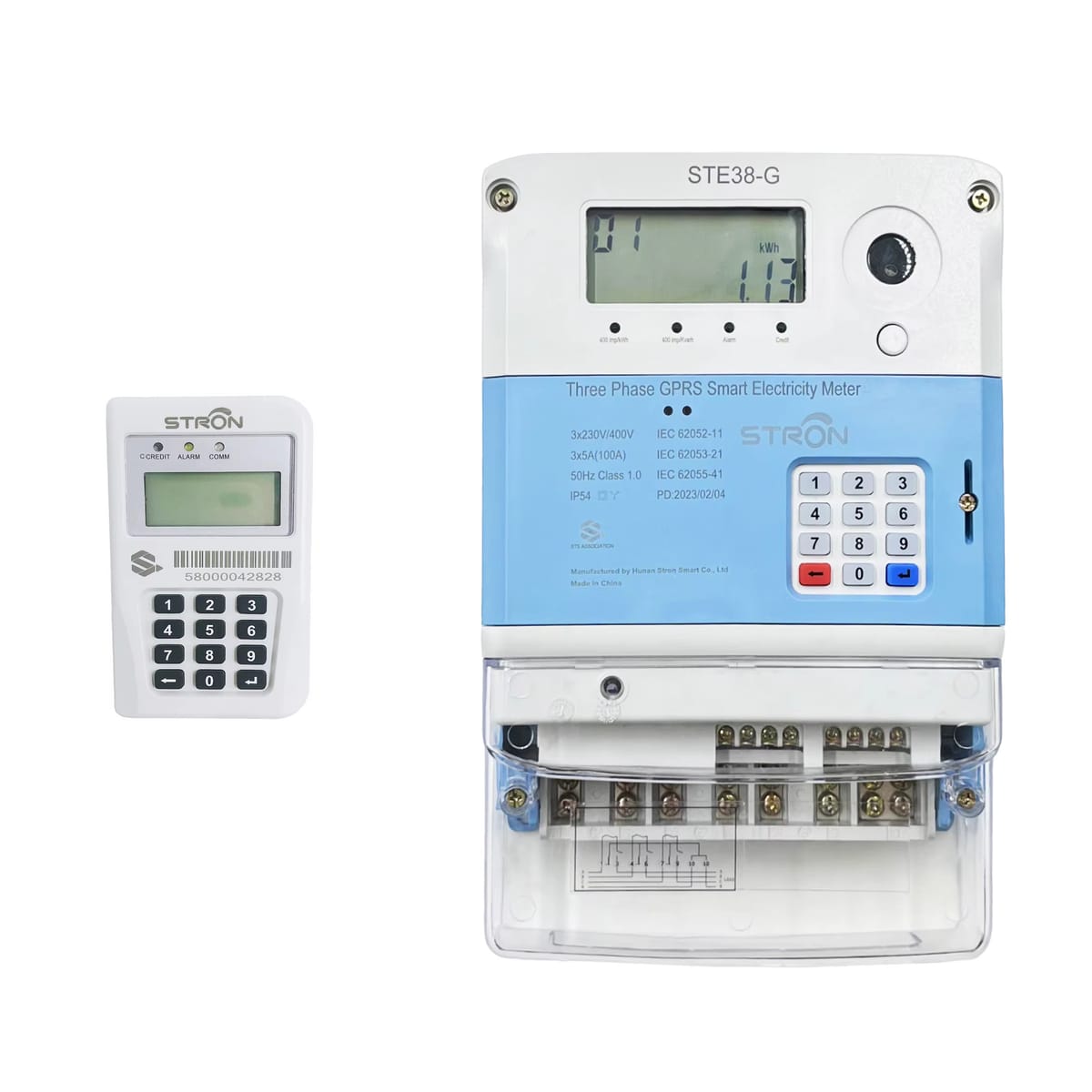
| Three-phase prepaid meter, with CIU | ₦180,000 |
| Water meter | ₦100,000 |
| Gas meter | ₦120,000 |
| Gate access system | Free |
| AI CCTV setup | Scoped |
| Estate levy collection | Scoped |
| Custom features for your estate | Scoped |
"Scoped" means we quote after a site visit. Those four vary so much between estates that a published number would be meaningless — a 12-flat block and a 200-unit gated estate are not the same CCTV job, and pretending otherwise wastes everyone's time.
The meter prices are fixed. Those you can budget against today.
The two decisions that set your bill
Everything else is detail. Get these two right and you can price your own project in about ten minutes.
Single-phase or three-phase
Most residential flats run on single-phase power. Shops, offices, restaurants, anything with heavy motors or large air-conditioning plant, and estate common services usually need three-phase.
You don't have to guess. Look at the incoming supply to each unit at the distribution board — one live conductor is single-phase, three is three-phase. Your electrician can confirm the whole building in one walk-through.
The gap is large — ₦65,000 to ₦180,000 — putting three-phase meters on single-phase flats is the most common way estates overspend on metering.
With CIU or without
CIU stands for Customer Interface Unit. It's the keypad that lives inside the flat, letting the resident enter tokens and read their balance without going anywhere near the meter itself.
The decision comes down to where the meters are physically mounted:
Meters banked together in a common area — a meter cabinet, a corridor wall, a plant room. This is how most Nigerian blocks are built. Residents can't reach their meter, and you don't want forty people with access to a cabinet containing everyone's meters. You need CIUs. ₦85,000 per unit.
Meters mounted inside each flat. The resident already has access. No CIU needed. ₦65,000 per unit.
The ₦20,000 difference is not optional convenience. Banked meters without CIUs means every top-up involves someone opening a cabinet, and every balance check is a walk downstairs. Estates that try to save the ₦20,000 here tend to come back for CIUs within a year.
Worked examples
An 8-flat block, single-phase, meters banked in the stairwell
| Item | Qty | Unit | Total |
|---|---|---|---|
| Single-phase with CIU | 8 | ₦85,000 | ₦680,000 |
| Single-phase with CIU (common services) | 1 | ₦85,000 | ₦85,000 |
| Total | ₦765,000 |
Roughly ₦96,000 per flat once the common-area meter is shared across them.
A 24-unit estate with three-phase common services
| Item | Qty | Unit | Total |
|---|---|---|---|
| Single-phase with CIU | 24 | ₦85,000 | ₦2,040,000 |
| Three-phase with CIU (borehole, gate, lighting) | 1 | ₦180,000 | ₦180,000 |
| Total | ₦2,220,000 |
A mixed-use building — 12 flats above, 4 shops below
| Item | Qty | Unit | Total |
|---|---|---|---|
| Single-phase with CIU | 12 | ₦85,000 | ₦1,020,000 |
| Three-phase with CIU (shops) | 4 | ₦180,000 | ₦720,000 |
| Total | ₦1,740,000 |
Adding water
Water is where the second round of estate arguments happens, usually about a year after electricity is solved. For the same 24-unit estate:
| Item | Qty | Unit | Total |
|---|---|---|---|
| Water meter | 24 | ₦100,000 | ₦2,400,000 |
Most estates do electricity first and water second. There's no technical reason to — doing both in one visit means one round of disruption instead of two — but budgets usually decide it.
What else to budget for
Metering hardware is rarely the whole cost. Depending on the state of your building:
- Distribution board work. Older boards often lack space for meters, or need rebuilding before anything can be mounted. This is the most common surprise cost in a retrofit.
- Cabling and enclosures. Running conductors from a banked meter position to each unit, and the cabinet to house the bank.
- Making good. Chasing walls, patching, painting.
- Common-area allocation. Not a cost, but a decision. Lifts, pumps, gate motors and security lighting draw power no single flat consumed. Meter it separately, then agree how it's shared — before the first bill, not after.
A new build is straightforward. A twenty-year-old block where nobody has opened the board since it was installed is a different job, and that's what the site visit is for.
Software features are free
Software features such as Gate access, Receipt, Invoice, Rent reminder, Rent agreement, are free. — it's included with a metering deployment. Once we're already installing infrastructure and running the platform for your estate, access control runs on the same system, so there's no separate hardware or software cost to pass on.
Worth knowing if you were about to price gate access as a standalone project.
Questions worth asking any vendor
Including us.
- Is installation included, or quoted separately? Get this in writing. It's the most common source of a quote that grows.
- Is there a recurring fee? Platform, transaction, or support. Ask for the number and what triggers it.
- What's the warranty, and what's the response time on a fault? A response-time commitment in a contract is worth more than a longer warranty without one.
- Are the meters certified? NEMSA certification, and the certification date.
- Who owns the meters at the end? The estate, or the vendor.
- What happens if we leave? Whether the hardware keeps working on another platform.
- Can residents top up without going through the estate office? If not, you haven't removed the admin, you've moved it.
If a vendor won't answer any of these in writing before you sign, that's your answer.
The short version
For a standard Nigerian residential block with meters banked in a common area, budget ₦85,000 per flat for electricity, plus one common-services meter, plus board work depending on the building's age.
For a 24-unit estate, that's around ₦2.2 million for electricity.
Book a site visit and we'll turn that into a real number for your building.