The five objections you'll hear when you propose sub-metering — and how to answer each
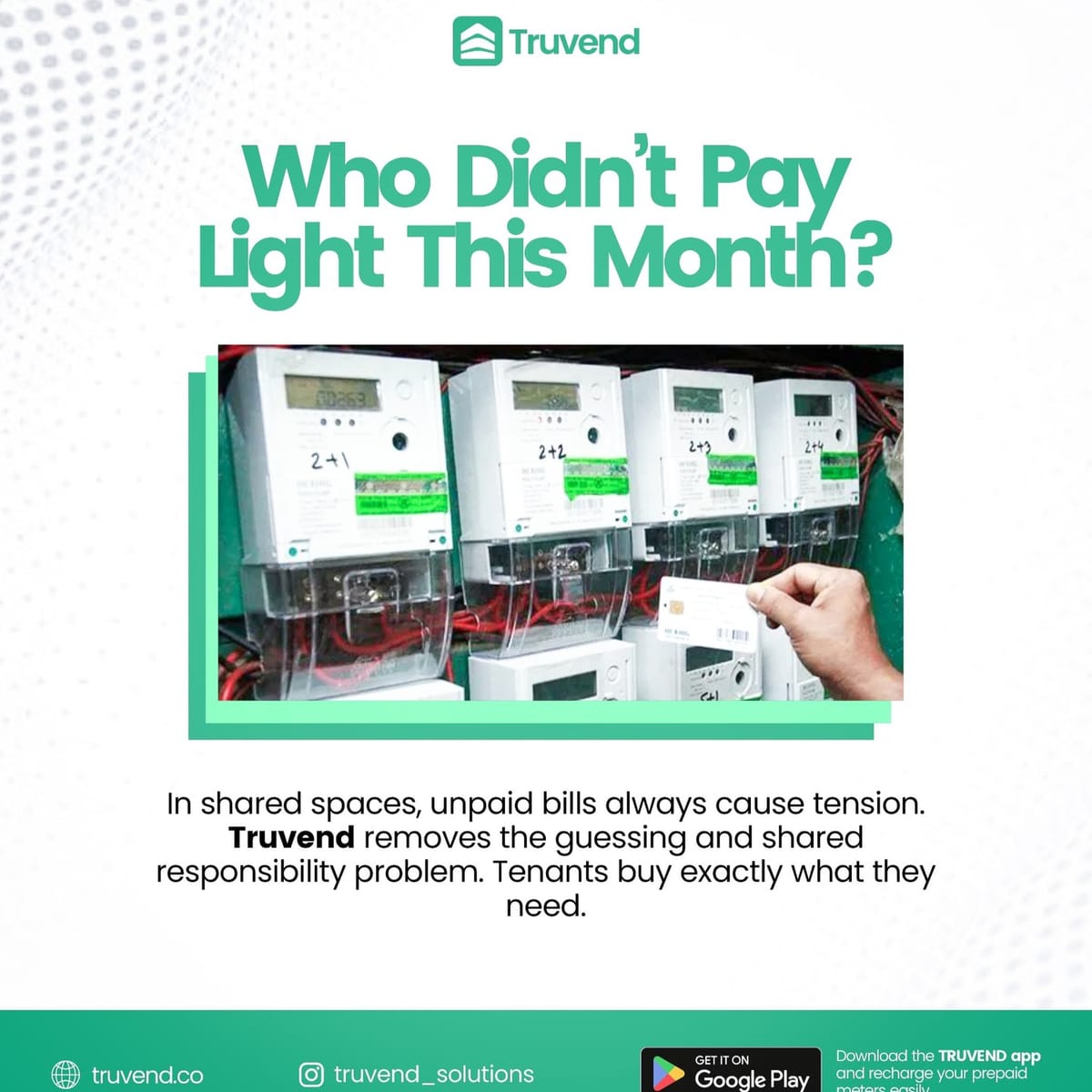
If you are the person proposing sub-meters to your estate, you are about to become the villain in a WhatsApp group. Not because the idea is bad, but because you are proposing to change how money moves, and every resident will assume the change benefits somebody other than them.
The five objections below come up in almost every estate. None of them are stupid. Most of them are the resident's real concern expressed as a different concern, which is why answering the words rather than the worry usually fails.
1. "We already have a meter"
What they say: The estate is metered. The DisCo reads it and sends a bill. Why add more meters?
What they mean: I don't understand the difference between a meter and a sub-meter, and I suspect you are creating work to justify something.
How to answer it: The estate meter measures what enters the compound. It does not measure what enters each flat. Everything after that boundary is a manual estimate — someone deciding how a single number should be divided among however many households. Sub-meters replace that estimate with a measurement.
The line that lands: the estate meter tells us what the estate owes. It tells us nothing about what you owe.
2. "This is too expensive"
What they say: We can't afford it right now.
What they mean: I don't know what it costs and I'm anchoring on a big number to avoid a commitment.
How to answer it: Give a real figure, per unit, in the meeting. Vagueness confirms the fear. Then set it against what the estate currently loses — to the flat with three air conditioners paying the same as the flat with one, to residents who leave and never settle, to the hours the manager spends chasing.
If you have a payback period, say it plainly and say how you calculated it. If you don't have one, say that too, and offer to bring one to the next meeting. Do not invent it in the room.
3. "Somebody is making money from this"
What they say: Who chose this vendor? Who benefits?
What they mean: I have watched estate projects before and I don't trust the procurement.
How to answer it: This is the objection that sinks projects, and it is never resolved by reassurance. It is resolved by transparency. Bring more than one quote. Say who introduced the vendor. Publish the contract terms to residents. Invite the loudest sceptic onto the review.
Once residents can see the process, the objection usually evaporates — and the person who raised it often becomes your best advocate, because they now feel ownership.
4. "What happens when somebody can't pay?"
What they say: Are you going to cut off a family?
What they mean: This is a moral question and I want to know what kind of estate we are.
How to answer it: Do not dodge this one, and do not pretend the technology answers it. It doesn't. Prepaid metering makes non-payment visible immediately instead of six weeks later, which means it becomes a decision the estate has to make rather than a loss it silently absorbs.
So make the decision in advance, in the open. Agree an emergency credit policy before the first meter goes in. Decide who can authorise it and how much. Write it down. An estate that has agreed its policy in calm conditions handles the first hard case far better than one improvising at 9pm.
5. "Who fixes it when it breaks?"
What they say: Will we be stuck with dead meters and nobody to call?
What they mean: The last thing installed here was abandoned by whoever installed it.
How to answer it: This is a fair objection and the honest answer is contractual, not technical. Who responds, in what timeframe, at whose cost, for how long. Get it in writing and read it out. If the vendor won't commit to a response time, that tells you something worth knowing before you sign.
The meeting itself
Three things matter more than the answers.
Bring the numbers before you bring the proposal. Show what the estate currently pays, and what the range of individual usage probably looks like. Let residents reach the conclusion themselves. People defend their own conclusions and resist yours.
Name the people who will pay more. In every estate, sub-metering means the low-usage households pay less and the high-usage households pay more. Do not pretend everyone wins. Say it directly — that the people currently subsidising others will see a reduction, and the people currently being subsidised will see an increase, and that this is the entire point.
Give the sceptics a role rather than an argument. Opposition in an estate is rarely about the proposal. It is about not being consulted.
What to prepare before the meeting
- Current estate consumption and cost, twelve months
- Cost per unit, installed, from at least two vendors
- A written maintenance and response-time commitment
- A draft emergency credit policy
- A named person residents can call afterwards
If you have those five things, the meeting is a formality. If you don't, no amount of answering objections will save it.